
How big are bed bugs? Size and signs to check before cleanup
Adult bed bugs are 5–7 mm long; young bugs and eggs are smaller. Check visual signs and know what to pause before cleaning, moving furniture or spraying.
By Fix Handbook
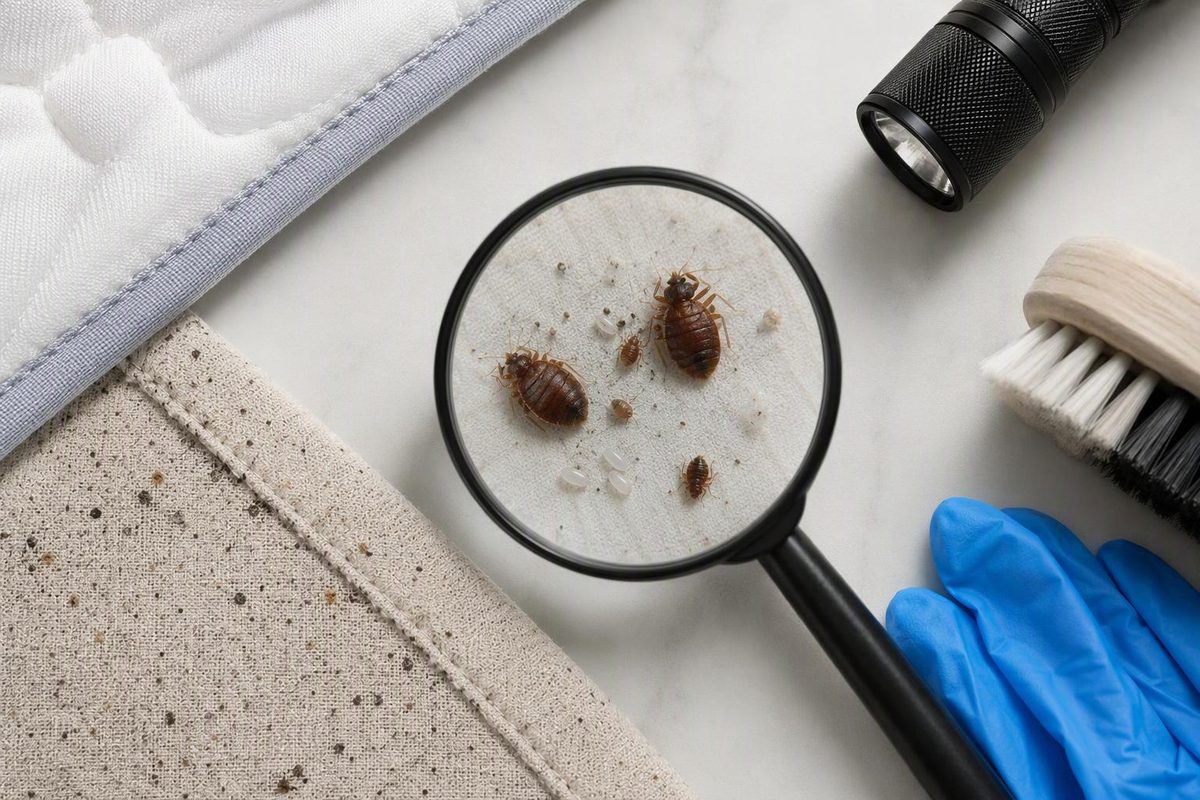
Adult bed bugs are about 5–7 millimeters long—roughly 3/16–1/4 inch, or the size of an apple seed. Young bed bugs are smaller, and their eggs are only about 1 millimeter long. Size is a useful first check, but it cannot confirm the insect on its own. The EPA’s identification guide pairs size with body shape, color and life stage.
Bed bug sizes at a glance
| Life stage | Approximate length | What to look for |
|---|---|---|
| Egg | 1 mm | Tiny, pearl-white, about the size of a pinhead |
| Young bed bug (nymph) | 1.5–4.5 mm across five growth stages | Smaller than an adult; translucent or whitish-yellow when unfed |
| Adult | 5–7 mm | Brown, flat and oval before feeding; swollen, reddish-brown and more elongated after feeding |
These measurements and features come from the EPA’s bed bug life-cycle guide. The apple-seed comparison applies to adults, not every stage.
Adults are large enough to see without magnification. Unfed nymphs can be very difficult to spot because they are both small and pale. For a closer inspection, use a flashlight and magnifying glass; if photographing a suspect insect, include a millimeter ruler beside it for scale.
Check the insect and its surroundings
A small brown insect on a bed is not automatically a bed bug. The EPA notes that other insects, including carpet beetles, can be mistaken for them. Compare your find with the official identification photographs rather than relying on size alone.
Start with accessible hiding places: mattress piping, seams and tags; box-spring seams; and visible cracks in the bed frame or headboard. Nearby upholstered furniture may also have evidence in seams and between cushions.
Look for a combination of:
- Live insects matching the size, shape and color above.
- Tiny eggs or eggshells, about 1 mm long.
- Pale yellow shed skins left as nymphs grow.
- Dark spots of bed bug droppings that may bleed into fabric like marker ink.
- Rusty or reddish stains caused by crushed bed bugs.
The EPA’s inspection guidance identifies these signs and hiding places. A stain alone does not identify the pest, and bites are a poor indicator: they can resemble other insect bites or skin conditions, and some people do not react at all. A quick inspection that finds nothing also cannot reliably rule out a small infestation.
Before cleaning, moving furniture or spraying
If identification is uncertain, pause treatment and save evidence first.
- Collect a suspect insect if possible. Keep it contained for identification and record where and when you found it. A clear photograph is useful to preserve what you saw, but keep the specimen too if you can. The EPA recommends showing a sample to an extension agent or another insect expert.
- Avoid moving suspect belongings into other rooms. If items must be transported for treatment, use sealed plastic bags. The EPA’s preparation guidance warns against moving items from an infested area to an unaffected one.
- Do not discard the mattress just because you suspect bed bugs. The EPA advises against discarding furniture when the bugs can be safely eliminated from it.
- Do not improvise a treatment. Avoid rubbing alcohol, kerosene or gasoline, and do not try to heat a room with a thermostat, space heater or fireplace. The EPA warns these approaches can be dangerous.
If an expert confirms bed bugs, consider an experienced pest-management professional to help plan treatment rather than guessing with sprays. If you rent an apartment, notify the landlord or property manager; nearby units should also be inspected. Your immediate task is to identify and contain the problem—not to start a furniture teardown.