
A mushroom on the wall is a moisture warning—not a cosmetic repair
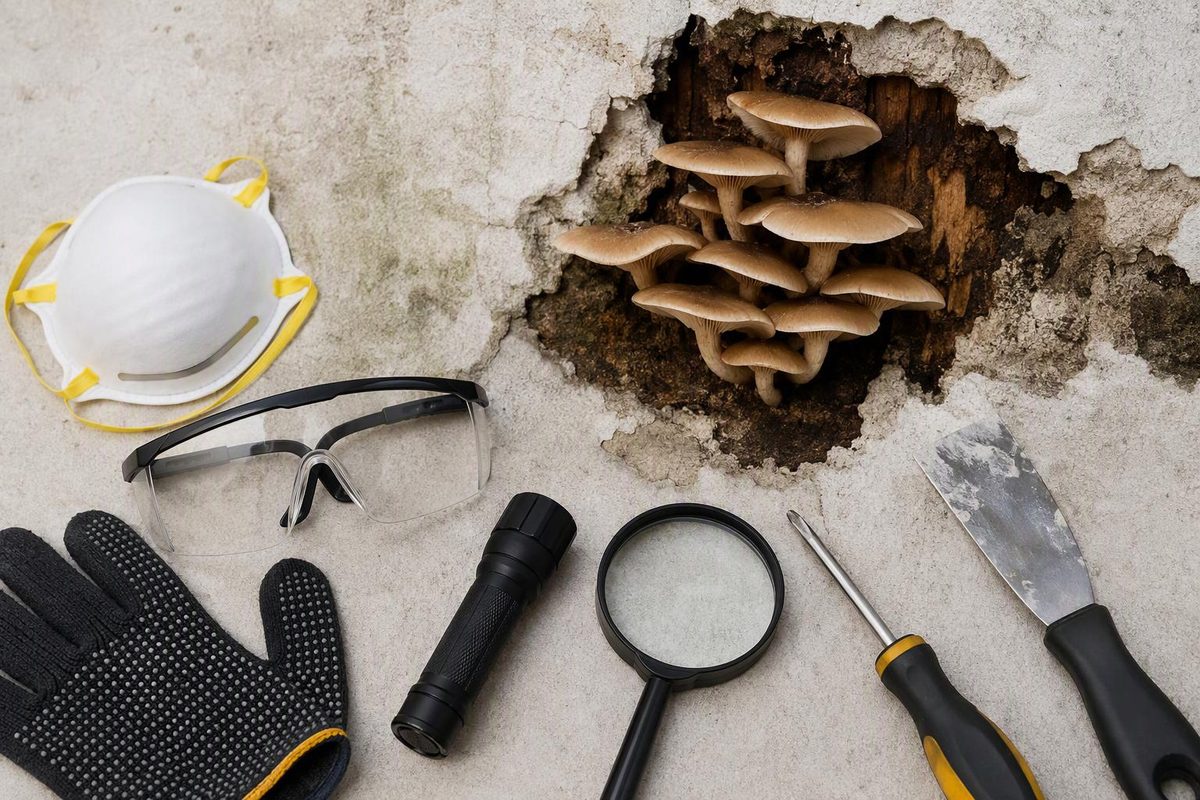
Mushrooms growing from a wall can signal persistent moisture and hidden wood decay. What to document, who to call and when not to cover the wall.
By Fix Handbook Editorial
Potentially, yes. Treat it as a warning of moisture within the wall and possible hidden wood decay—not simply something to wipe off. It does not, by itself, prove that the mushroom is poisonous or that the wall is about to collapse. The useful next step is to investigate the moisture source and the condition of the materials before patching or painting.
The USDA’s Wood Handbook explains that wood-decay fungi can produce mushrooms, brackets or crusts while microscopic fungal strands permeate the wood and consume its structural components. Decay can reduce wood strength before obvious deterioration appears. That is why even a small growth deserves attention. USDA: Biodeterioration of Wood
What the mushroom tells you—and what it cannot
A mushroom is a fungal fruiting body. If it is emerging from a wall or a joint beside it, the visible growth may be only part of the problem. Its appearance alone cannot establish which material is supporting it, how far the fungus extends or whether framing has weakened.
For wood-decay fungi, moisture is central: rainwater, condensation, wet ground and plumbing leaks can create conditions for decay. A long-undetected plumbing leak can cause serious damage inside a building. Do not assume that normal bathroom humidity is the whole explanation, or that a dry-looking wall surface means the cavity is dry. USDA guidance on decay and building moisture
The finding supports investigating persistent or repeated wetting. It does not tell you how long the wall has been wet, identify “dry rot” from a photograph or establish that the entire wall needs replacement.
Is it a health danger?
Do not eat or taste an unidentified mushroom, and keep children and pets away from it. If someone has swallowed any, contact your local poison service immediately rather than waiting for symptoms. In the United States, call 1-800-222-1222. Rutgers and New Jersey Poison Control guidance
There may also be mold in the wet assembly. EPA says mold exposure can cause allergic reactions and irritation, and can trigger asthma attacks in people with asthma who are allergic to mold. That is guidance about mold—not evidence that this particular mushroom releases a specific toxin. Seek medical advice for health concerns, and avoid disturbing suspected hidden growth. EPA’s home moisture and mold guide
Document it before disturbing the wall
Stop DIY work and seek urgent assessment if the wall is bulging, a nearby ceiling or floor is sagging, or exposed supporting timber is visibly deteriorated. Keep clear rather than pressing, probing or cutting it. These are reasons for a safety assessment, not proof that the mushroom caused the damage. Western Australia’s building regulator identifies sagging plasterboard ceilings as a warning sign of possible collapse; USDA warns that visibly decayed wood has substantially reduced strength. Ceiling warning signs · Decay and wood strength
Otherwise, from a safe position, make a record that helps the person investigating:
- Photograph the whole wall, then the growth and its exact emergence point. Include a ruler nearby if you can do so without touching it.
- Record the date, room and location: for example, beside a shower, below a window or at the floor-wall joint.
- Note stains, peeling finishes, swelling, musty odors and any already-visible crumbly wood. Do not probe the wall to test its strength.
- Record recent leaks, earlier repairs, recurrence and whether dampness seems to follow rain or use of a nearby fixture.
If you rent, send the photographs and a written moisture report to the owner or manager promptly. EPA recommends reporting plumbing leaks and moisture problems immediately. EPA guidance for renters
Do not start by cutting out a patch or pulling off wallpaper. EPA warns that disturbing hidden mold can release spores and advises getting an experienced professional if hidden mold is suspected. EPA’s home mold guide
Arrange assessment in this order
- Find and stop the moisture source. A plumber may be appropriate for a suspected pipe or fixture leak; rain-related wetting may need a roofer or building-envelope specialist. Tell them about the mushroom, not just the stain.
- Assess the wet assembly and possible decay. Ask for someone experienced in water-damaged buildings and timber decay. The investigation should establish what is wet, whether concealed materials need inspection and whether any weakened wood is structural. For suspected structural damage, request a structural assessment—not just a cleanup quote. EPA identifies moisture meters and borescopes as tools professionals may use to locate hidden moisture and mold problems. EPA building-investigation guidance
- Repair damage, dry and verify before closing. Drying does not restore strength already lost to decay. USDA recommends correcting the moisture condition and replacing weakened wood; wet or infected wood should not be enclosed before thorough drying. USDA repair principles
Do not cover the symptom
Pulling off the mushroom or applying a surface cleaner cannot demonstrate that concealed materials are dry or sound. Painting, caulking or installing a new covering is not a substitute for that assessment. EPA specifically advises against painting or caulking moldy surfaces before cleanup and drying. EPA cleanup guidance
Before agreeing to close the wall, ask: What caused the wetting? How was it corrected? Which materials were damaged? How was drying checked? Was possible structural decay assessed? A dry-looking face alone is not a satisfactory answer.
If opening the wall is part of the agreed investigation, use the separate before-you-drill, cut or dig safety check for hidden services and other work-area hazards.